

What Is an Underslung Crane and How Can It Improve Material Handling Efficiency?
Efficient material handling is essential for industries that rely on the safe, smooth movement of heavy materials. Manufacturing plants, warehouses, workshops, and industrial facilities need reliable lifting equipment to boost productivity and use space more effectively. An underslung crane is an effective material handling solution designed to move loads along overhead runway systems while helping businesses optimize their workspace.
Harikant Engineering Industries understands the importance of reliable industrial lifting solutions for modern workplaces. Businesses looking for an Underslung Crane Manufacturer in India can explore crane configurations that match their lifting capacity, building layout, and operational needs.
In this blog, we explain what an underslung crane is, how it works, its benefits, industrial applications, and the factors to consider when selecting the right crane system.
What Is an Underslung Crane?
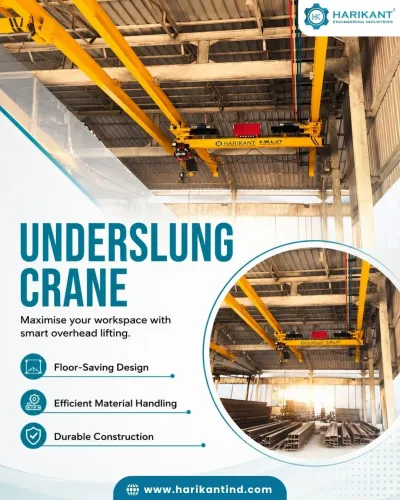
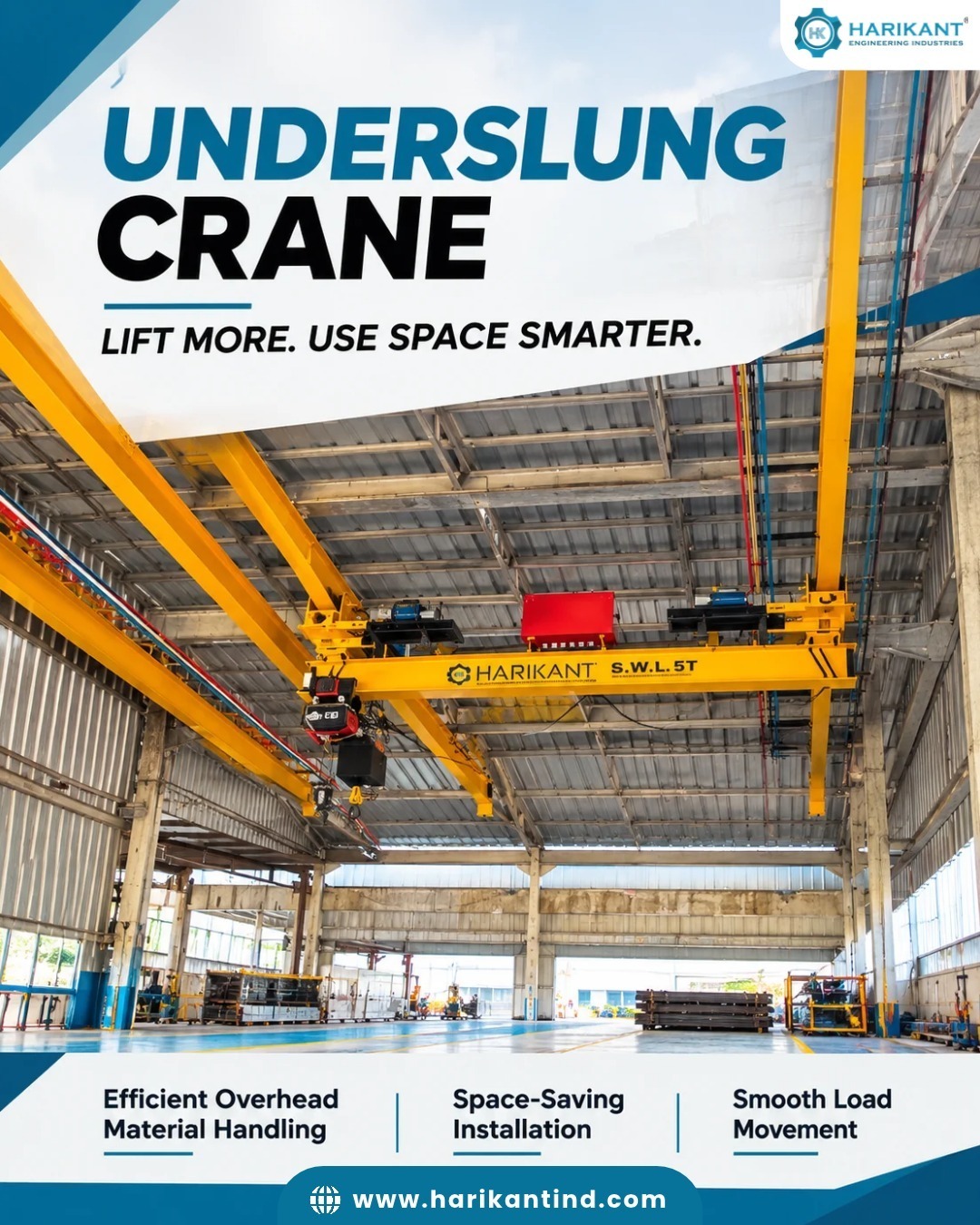
An underslung crane, also known as an under-running overhead crane, is a type of overhead lifting equipment in which the crane bridge travels on the lower flanges of elevated runway beams. Unlike a top-running overhead crane, which travels on top of runway rails, an underslung crane is suspended from the runway structure.
This design makes an underslung overhead crane suitable for facilities with limited floor space or where the existing building structure can support a suspended crane system.
Underslung cranes commonly lift, lower, and transport materials between workstations. Depending on the application, they may feature a single-girder bridge, an electric hoist, a trolley assembly, and suitable control options.
How Does an Underslung Crane Work?
An underslung crane operates using a bridge structure, end trucks, a hoisting mechanism, and an overhead runway system. Each component supports material movement and positioning.
The main working process includes the following steps:
1. Lifting the load: An electric hoist raises the material using a suitable lifting attachment.
2. Moving the load horizontally: The hoist trolley travels along the crane bridge to position the load.
3. Traveling along the runway: The crane bridge moves along the suspended runway beams to transport materials across the work area.
4. Lowering the load: The operator carefully lowers the material at the designated workstation.
Depending on the installation, the crane may use pendant controls or radio remote controls. The appropriate arrangement depends on lifting capacity, travel distance, working environment, and operating frequency.
What Are the Key Benefits of an Underslung Crane?
An underslung crane offers several advantages for industrial material handling. Its suitability depends on the building structure, lifting requirements, and working conditions.
1. Efficient Use of Floor Space
An underslung overhead crane moves materials above the work area, keeping floors clear for machinery, storage, workers, and production activities.
This makes it a practical option for workshops, assembly lines, and manufacturing facilities with limited floor space.
2. Better Use of Available Headroom
The under-running design can be useful in buildings where overhead clearance and structural geometry influence crane selection. A suitable configuration may help maximize available hook travel within the installation’s height limitations.
The actual lifting height depends on runway elevation, hoist dimensions, structural arrangement, and required hook travel.
3. Improved Material Handling Efficiency
An underslung crane helps transfer materials between workstations without relying entirely on forklifts or manual handling equipment. This can reduce unnecessary material movement and support a smoother production workflow.
By positioning loads where they are needed, businesses can streamline material transfer and minimize avoidable handling delays.
4. Flexible Installation Options
Underslung cranes can suit buildings with appropriate roof structures and engineered runway support. Depending on the facility design, runway beams may be suspended from roof trusses or other structural members designed to carry the required loads.
A qualified structural assessment is essential before installation to confirm that the building and supporting components can safely accommodate the crane.
5. Improved Workplace Organization
Overhead material movement can help separate lifting operations from floor-level activities. When properly designed and operated, an underslung crane can support more organized workflows and reduce congestion in designated material handling areas.
6. Adaptability to Different Industrial Requirements
Underslung cranes can be configured according to load weight, travel distance, lifting height, and operating frequency. Selecting the correct configuration helps businesses align their lifting equipment with actual production needs.
Where Are Underslung Cranes Commonly Used?
Underslung cranes are used across industries that require efficient overhead material movement.
Manufacturing Plants
Manufacturers use underslung cranes to move components, raw materials, machine parts, and finished products between production stages.
Workshops and Assembly Lines
Engineering workshops and assembly facilities use overhead lifting systems to position components during fabrication, assembly, maintenance, and equipment handling.
Warehouses and Storage Facilities
In suitable buildings, underslung cranes help move materials between storage, inspection, and dispatch areas while keeping floor space available for other activities.
Automotive and Engineering Industries
Automotive component manufacturers and engineering facilities may use underslung cranes to handle machine parts, assemblies, and production materials.
Industrial Maintenance Areas
Maintenance teams may use underslung cranes to lift and position equipment components during servicing, inspection, or replacement operations.
How to Choose the Right Underslung Crane for Your Facility
Before selecting an underslung crane, evaluate the following factors to ensure that the equipment matches your operational requirements.
1. Required Lifting Capacity
Determine the maximum load weight, including any lifting attachments where applicable. Select a crane and hoist with a suitable rated capacity for the intended duty.
2. Span and Travel Distance
Measure the required crane span and longitudinal travel distance. These dimensions influence the runway arrangement, bridge design, and overall installation requirements.
3. Available Headroom
Assess the available building height, required hook travel, hoist dimensions, and clearance around machinery and structures.
4. Building Structure
Confirm that the roof trusses, runway supports, connections, and other structural elements are engineered to withstand the applicable loads and forces.
5. Operating Frequency
Consider how often the crane will operate and the expected lifting cycle. Frequent or demanding operations may require a different duty classification and equipment configuration.
6. Control and Safety Features
Evaluate suitable operating controls, emergency stop arrangements, overload protection where applicable, travel limits, and other safety features based on the crane design and relevant requirements.
7. Installation and Maintenance
Consider access for installation, inspection, servicing, and component replacement. Planned maintenance helps identify wear and operational issues before they become more serious.
What Safety Measures Should Be Followed When Using an Underslung Crane?
Safe crane operation requires appropriate equipment, trained operators, regular inspections, and compliance with applicable regulations.
· Important precautions include:
· Never exceed the crane’s rated lifting capacity.
· Inspect the hoist, hooks, slings, brakes, controls, and other relevant components as required.
· Keep people clear of suspended loads and designated lifting zones.
· Avoid lifting loads that are improperly secured or whose weight is unknown.
· Do not allow unauthorized personnel to operate the equipment.
· Follow the manufacturer’s operating and maintenance instructions.
· Arrange inspections and maintenance according to the equipment requirements and applicable safety standards.
· Ensure that the building structure and runway supports are suitable for the installed crane.
These precautions help reduce operational risks and support dependable material handling.
Why Choose an Underslung Crane Supplier in Gujarat?
Businesses looking for an Underslung Crane supplier in Gujarat should evaluate product suitability, engineering support, manufacturing quality, installation requirements, and after-sales service.
A suitable supplier should understand the customer’s material-handling application and help identify the right crane configuration. Buyers should also review technical specifications, rated capacity, component quality, documentation, maintenance requirements, and compliance with relevant standards.
For businesses across Gujarat, working with an industrial crane provider that understands local manufacturing and engineering requirements can help simplify project coordination and equipment selection.
Contact Harikant Engineering Industries to discuss your underslung crane requirements and determine a suitable solution based on your facility layout and operational needs.
Frequently Asked Questions About Underslung Cranes
1. What is an underslung crane used for?
An underslung crane lifts, lowers, and transports materials along an overhead runway system. It is commonly used in manufacturing plants, workshops, assembly lines, and other industrial facilities.
2. How does an underslung overhead crane work?
The crane bridge travels along runway beams, while a hoist and trolley move the load across the bridge. This arrangement allows operators to transfer materials between designated work areas.
3. What is the difference between an underslung crane and an overhead crane?
An underslung crane is a type of overhead crane that runs on the lower flanges of runway beams. The term overhead crane also includes other configurations, such as top-running cranes, which travel on top of their runway rails or beams.