

Underslung Crane: Working Principle, Benefits, Applications and Selection Guide
Efficient material handling is essential for industrial facilities that need to lift and move heavy loads safely and efficiently. An Underslung Crane is an overhead lifting solution designed to transport materials across workshops, manufacturing plants, assembly lines, and production areas while making effective use of available floor space.
Harikant Engineering Industries provides industrial engineering solutions for material handling applications. Choosing a suitable underslung overhead crane can help businesses streamline material movement, reduce manual handling, and improve workflow efficiency.
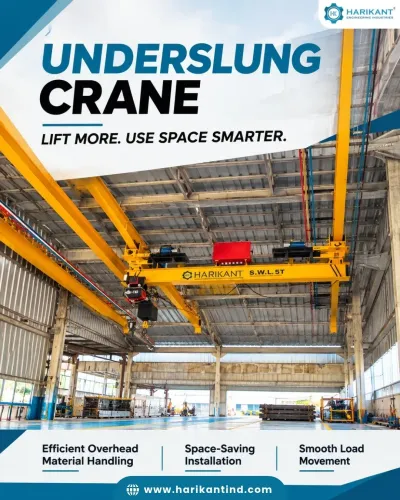
An underslung crane typically travels along the lower flanges of suspended runway beams, making it suitable for installations where an under-running crane arrangement meets the building's structural and operational requirements.
This guide explains how an underslung crane works, its key components, industrial applications, benefits, and key factors to consider when selecting the right crane for your facility.
What Is an Underslung Crane?
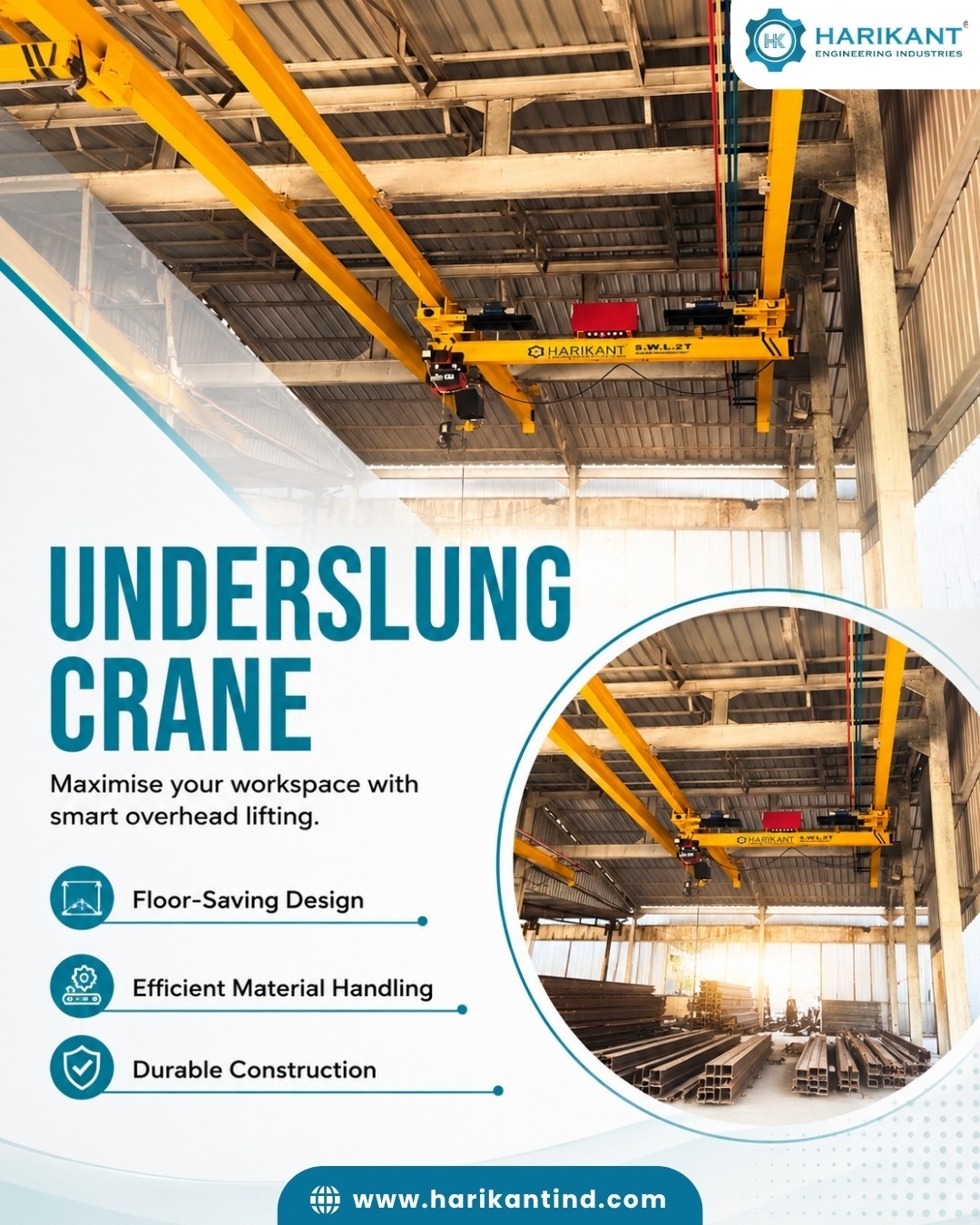
An underslung crane, also known as an under-running overhead crane, is a lifting system in which the crane bridge travels along the lower flanges of suspended runway beams.
The system generally consists of a bridge girder, runway tracks, end trucks, an electric hoist, a trolley, and a control system. The bridge travels along the runway, while the trolley moves the hoist across the bridge to position the lifting point over the load.
This configuration can be useful in industrial buildings where a suspended runway arrangement fits the available space and structural layout.
Underslung cranes commonly move machine components, raw materials, tools, assemblies, and finished products within defined work areas.
The lifting capacity, span, lifting height, and travel arrangement depend on the crane design, building structure, and application requirements.
How Does an Underslung Crane Work?
An underslung overhead crane uses coordinated lifting and travel movements to move materials between locations within its operating area.
1. Suspended Runway System
Runway beams are suspended from suitable roof trusses, structural beams, or an engineered support framework. These tracks provide the crane bridge's travel path.
2. Bridge Movement
The bridge moves along the runway tracks, allowing the crane to cover the required working area.
3. Hoist and Trolley Movement
The trolley carries the electric hoist across the bridge. This movement helps position the lifting equipment directly above the load.
4. Load Lifting
The hoist raises the load using a hook or another suitable lifting attachment. Operators control the lifting operation according to the rated capacity and operating instructions.
5. Horizontal Load Transportation
After lifting the load to a safe travel height, the operator moves the crane and trolley toward the destination.
6. Controlled Load Placement
The hoist lowers the load to the required position, completing the material-handling cycle.
This combination of bridge travel, trolley movement, and vertical lifting simplifies material transportation in manufacturing and engineering facilities.
Key Components of an Underslung Crane
Understanding the main components helps businesses evaluate crane configuration and suitability.
- Bridge Girder: The main structural member that spans the work area.
- Runway Beams: Suspended tracks along which the crane bridge travels.
- End Trucks: Assemblies that support bridge travel and contain the relevant wheel or roller arrangements.
- Electric Hoist: The mechanism used to raise and lower loads.
- Trolley: The assembly that moves the hoist across the bridge.
- Drive Motors: Provide powered bridge or trolley movement where specified.
- Control System: May include a pendant, push-button station, or radio remote.
- Electrical System: Supplies power to the crane's drive and control equipment.
- Safety Devices: May include limit switches, brakes, overload protection, and emergency stops, depending on the design and applicable requirements.
Select the final configuration based on lifting capacity, span, duty classification, operating frequency, and site conditions.
Benefits of Using an Underslung Crane
A properly selected and installed underslung crane can offer several advantages for industrial material handling.
1. Efficient Use of Floor Space
Because the crane operates overhead, it leaves more floor space for machinery, storage, production equipment, and personnel movement.
2. Suitable for Certain Restricted Layouts
An underslung crane can be advantageous where a suspended runway arrangement fits the building layout better than a conventional top-running crane. Actual suitability depends on Headroom, clearances, and structural capacity.
3. Reduced Manual Material Handling
Mechanical lifting helps operators move heavy or bulky components without relying entirely on manual lifting or pushing, reducing physical handling demands.
4. Improved Production Workflow
The crane can move materials between workstations, assembly areas, and maintenance locations, reducing unnecessary movement and improving workflow coordination.
5. Flexible Load Positioning
Bridge and trolley movements let operators position loads at different points within the crane's working area, supporting assembly, fabrication, and maintenance tasks.
6. Better Space Utilisation in Industrial Buildings
A suitable under-running arrangement can help businesses organise material movement around existing machinery and workstations.
7. Support for Safer Material Movement
When engineered, maintained, and operated correctly, an underslung crane can transport loads under control and reduce reliance on manual handling. Safe operation still requires trained operators, suitable lifting accessories, inspections, and adherence to operating procedures.
Industrial Applications of Underslung Cranes
Underslung cranes are used in industries that require controlled overhead lifting and material transportation.
Manufacturing Plants
Used to move raw materials, machine parts, work-in-progress components, and finished goods between production stations.
Engineering Workshops
Useful for lifting and positioning components during fabrication, machining, equipment assembly, and maintenance.
Automotive Industry
Suitable applications include moving compatible components, tooling, and assemblies within manufacturing and service facilities.
Assembly Lines
An underslung crane can transport materials between workstations and help coordinate assembly operations.
Warehouses and Industrial Storage
Where the building layout permits, underslung cranes can move heavy items between designated handling and storage areas.
Industrial Maintenance
Maintenance teams may use cranes to lift motors, pumps, machinery components, and other equipment during servicing and replacement.
Small and Medium-Sized Industrial Facilities
An underslung crane can be an option for facilities where the load requirements, overhead structure, and available space support a suspended runway system.
Underslung Crane vs. Top-Running Overhead Crane
Both crane types provide overhead lifting, but their runway arrangements and installation requirements differ.
FeatureUnderslung CraneTop-Running Overhead Crane
Runway arrangement: Travels on the lower flanges of suspended runway beams; travels on top of runway rails or beams.
Structural support: Requires a suitable suspended structure or engineered support framework. Commonly uses runway girders supported by columns or an independent structure.
Installation suitability: Useful when an under-running arrangement fits the building design. Suitable for a broad range of conventional industrial installations
Floospaceac:e Keeps the lifting system overhead.
Lifting capacity Depends on crane design and structural limitations Available across a wide range of capacities.
Selection factors: Headroom, suspended support, clearances, and load requirements. Runway support, span, Headroom, and load requirements
Neither design is universally better. The appropriate crane depends on the building structure, lifting requirements, working area, and installation budget.
How to Choose the Right Underslung Crane
Selecting the right underslung crane requires assessing the facility, operating conditions, and material-handling requirements.
1. Determine the Required Lifting Capacity
Identify the heaviest load to be lifted, including relevant lifting attachments. Choose a rated capacity appropriate for the intended application and duty.
2. Measure the Crane Span
The span is the distance between the runway tracks. Accurate measurements help establish the required bridge dimensions and coverage area.
3. Check Available Headroom
Assess the space available for the bridge, trolley, hoist, hook travel, and suspended load. Consider existing machinery and overhead obstructions.
4. Verify Structural Capacity
An underslung crane transfers loads into its supporting structure. A qualified structural engineer should assess the supporting beams, roof trusses, connections, and framework for the relevant loads and dynamic effects.
5. Select a Suitable Hoist
When selecting the hoist, consider the required lifting height, load capacity, lifting speed, operating frequency, and control requirements.
6. Evaluate Duty Classification
The expected operating frequency, average load, and service conditions influence the crane's required duty classification. Choose a crane designed for the actual workload.
7. Review Travel and Control Options
Determine whether manual or powered travel is appropriate and whether pendant or radio remote control suits the operating environment.
8. Check Safety Requirements
Verify suitable braking arrangements, limit switches, emergency stops, overload protection where required, and compliance with applicable regulations.
9. Consider Maintenance and Service Support
Review spare-parts availability, maintenance documentation, inspection services, and technical support before purchasing.
Safety and Maintenance Tips for Underslung Cranes
Regular inspection and safe operating practices help maintain crane reliability and protect personnel.
- Inspect runway beams, structural connections, end trucks, and the bridge at the required intervals.
- Check hooks, wire ropes or chains, brakes, and lifting accessories for damage and wear.
- Test controls and safety devices according to the manufacturer's instructions.
- Never exceed the crane's rated lifting capacity.
- Avoid shock loading, sudden movements, and uncontrolled load swinging.
- Keep personnel clear of suspended loads and the crane's travel path.
- Ensure operators are trained and authorised.
- Follow the manufacturer's maintenance schedule and applicable regulations.
- Remove defective equipment from service until it has been appropriately inspected and repaired.
Establish inspection and testing requirements based on the equipment design, applicable regulations, manufacturer recommendations, and operating conditions.
Why Choose Harikant Engineering Industries for Underslung Crane Requirements?
Choosing a suitable crane supplier is a key step in planning a reliable industrial material-handling system.
When evaluating Harikant Engineering Industries for your underslung crane requirements, discuss the following factors to identify an appropriate solution:
- Required lifting capacity and lifting height.
- Available span and building clearances.
- Structural support and installation requirements.
- Hoist, trolley, and travel configurations.
- Safety features and applicable compliance requirements.
- Maintenance, spare parts, and technical support.
Select a crane based on the facility's actual operating requirements, not lifting capacity alone.
Contact Harikant Engineering Industries to discuss your material handling application and request a quotation based on your project specifications.
Frequently Asked Questions (FAQs)
1. What is an underslung crane?
An underslung crane is an overhead lifting system that typically travels on the lower flanges of suspended runway beams. It lifts and transports materials within industrial facilities.
2. How does an underslung overhead crane work?
The bridge travels along the runway tracks, while a trolley moves the hoist across the bridge. The hoist raises and lowers the load, enabling controlled movement within the crane's working area.
3. What are the main benefits of an underslung crane?
Potential benefits include efficient use of floor space, reduced manual handling, flexible load positioning, and improved workflow coordination. The actual advantages depend on the installation and application.